Work
Dragon Ball Z: Budokai 3
Dragon Ball Z: Budokai 3, released as Dragon Ball Z 3 in Japan, is a fighting…
Dragon Ball Z: Budokai 3, released as Dragon Ball Z 3 in Japan, is a fighting video game based on the popular anime series Dragon Ball Z. It was developed by Dimps and published by Atari for the PlayStation 2, and released on November 16, 2004, in North America through standard release and a limited edition release, which included a DVD featuring a behind the scenes look on the game's development.
Europe soon saw a release on December 3, 2004, and obtained a new edition in Fall 2005 which included character models not available in the North American release, as well as a few items and the ability to switch the voices over to Japanese. Japan later saw a release from Bandai on February 10, 2005, and also included the extras that the North American release did not have. Soon after, the Greatest Hits version was released in North America and contained the extra features, including the ability to play with the Japanese voices. The game was re-rendered in HD for the 2012 PlayStation 3 and Xbox 360 Dragon Ball Z: Budokai HD Collection.
Gameplay
Budokai 3 is a fighting game with cel-shaded graphics to mirror the look and feel of the combat in the series. Where Dragon Ball Z: Budokai included characters all the way to the Android Saga and Dragon Ball Z: Budokai 2 introduced characters from the Buu Saga, Budokai 3 now has characters from the DBZ films, Dragon Ball GT, and even the original Dragon Ball.
New mechanics
Ki – The Ki system is completely revamped from the past two Budokai games. Each character now has a base Ki level, Ki will increase/decrease slowly until it is at base Ki level. If Ki is higher than the base Ki, then a bonus in attack is acquired (under base Ki level, a defense bonus is gained until you are back at normal defense level). Transformations, now instead of draining Ki slowly, can increase base Ki (this also evens out transformations as having less than base Ki will reduce a character's defense). Additionally, auras have been redone, and now look very close to the auras seen in the anime.
Transformation – In the previous two games, a transformation gradually drained ki, and being knocked down with less than the ki level needed to transform would revert the transformation. In Budokai 3, a transformation will instead increase the base ki level, and is only reverted if a character is hit with less than one ki gauge, or if they allow hyper mode to run out. Additionally, some transformations (like Cell, Broly and Frieza's) are irreversible.
Beam Struggle – If two beam attacks collide, instead of cancelling each other out, a beam struggle is activated. The two characters rotate control sticks in order to push the two beams to one character or the other. If the fighters are close to each other and use Energy Wave Blasts on each other, they can damage each other or cause a Double K.O. with low health.
Fatigue – A new fatigue meter is added to the HUD, it increases during battle. It is most important during an ultimate attack, but if fatigue is maxed out, a character will become exhausted if knocked down with less than one Ki gauge full.
Dodging – By pressing guard just before being attacked, the character will dodge the attack completely, at the cost of a little ki.
Teleport Counters – Before any attack connects, a character can teleport behind the attacking character and counterattack at the cost of 3 ki bars. If only 2 ki bars remain, the character cannot teleport anymore; they have to charge up ki in order to teleport again.
Items – Item capsules can be equipped and used in battle. Items can only be used once and have various effects ranging from increasing health to granting temporary Ki Blast immunity. If a character is interrupted while trying to use an item, the item is lost.
Hyper Mode – By pressing L2, a character enters Hyper Mode. They turn red, their ki slowly decreases, and they lose the ability to block. In Hyper Mode, a character is immune to most weak melee attacks, if Hyper Mode is allowed to run out, the character is fatigued and loses any applicable transformations. Hyper Mode is necessary to start Dragon Rushes and Ultimate Attacks. Hyper Mode is rather wildly reviled by veteran players due to the constant drain, the fact that the user slows down, and how easy they become to avoid until they are out of Ki and left helpless by fatigue. Hyper Mode does take up time as the fighter will have to turn the analog stick to get out of exhaustion, and the fighter can get attacked by their opponent.
Dragon Rush – If a character knocks another character away while in Hyper Mode, that character can start a Dragon Rush. A Dragon Rush is a three-part game of chance, where both characters choose one of the four buttons. If the defender can pick the same button as the attacker, the Dragon Rush is ended, however, after each part, the number of buttons is decreased. If all three parts connect, the attacking character launches a powerful finisher.
Ultimate Attacks – When in Hyper Mode, characters can launch powerful (and quite cinematic) ultimate attacks. Players use timing to stop a gauge just before it fills up. Depending on the results, the attack can have its power reduced, miss, or be sent back to the attacker. Fusion is also executed in the same way, but the mechanics for fusion are the same as they are in Budokai 2.
Fusion – While still performed the same way, and still providing infinite Ki, Fusion Dance now instantly ends when the timer runs down to zero (whereas in the previous game, dance fusion was only reverted when your character falls over after the timer runs out). Fusion is also executed in Hyper Mode, just like an ultimate attack. If the opponent presses the same button while throwing the earring during a Potara Fusion, the character will catch it and crush it. After this happens, the player is unable to fuse.
Super Saiyan 4 – Goku and Vegeta can now transform into Super Saiyan 4, changing their Kamehameha and Galick Gun attacks into 10x Kamehameha and Final Shine Attack respectively. These attacks are also 72% stronger than their basic versions. They can also fuse as Super Saiyan 4's to form Super Saiyan 4 Gogeta.
"Free Flight" – By holding up or down while doing a backward dash, characters can ascend and descend, where in the past, a player had to be hit into the sky. This is a helpful feature as larger characters have an easier time hitting smaller characters while others simply fight less effectively in the air.
Skills
As in Budokai and Budokai 2, each character is able to be customized by using a 7-slot skill tray. Players may choose up to 7 skills and give them to a fighter. Skills can take from one to seven slots (including ones such as Bulma's Armor and items which include things such as Senzu Bean and Vaccine). The throws are in the control system and the attacks where your character blasts ki attacks rapidly at a downed opponent have been incorporated into Dragon Rush.
Dragon Universe
The story mode in Budokai 3 takes place on a world map called Dragon Universe. This mode consists of 11 playable characters traveling around Earth or Namek during the four main sagas of Dragon Ball Z: Saiyan Saga, Frieza Saga, Cell Saga, and Majin Buu Saga, while collecting items such as money, capsules, Dragon Balls or unlocking other characters for use in the other game modes. The various characters are each unlocked by completing a required task within Dragon Universe (for example, Dr. Gero is unlocked by defeating Dr. Gero with Yamcha in the Androids Saga).

The Dragon Universe has a high level of replayability due to events in the game potentially changing from playthrough-to-playthrough. For example, in Goku's first playthrough the majority of the story proceeds as it does according to the anime. However, in the following playthroughs, certain choices can include Goku's fight with Frieza changing into a fight with Cooler instead. These choices can even lead to events such as fighting Broly and Omega Shenron after fighting Super Buu. With eleven characters available for play in Story Mode, and various choices available for each character, Dragon Universe has significantly more replay value than previous Budokai games.
The characters playable in Story Mode are:
Kid Gohan

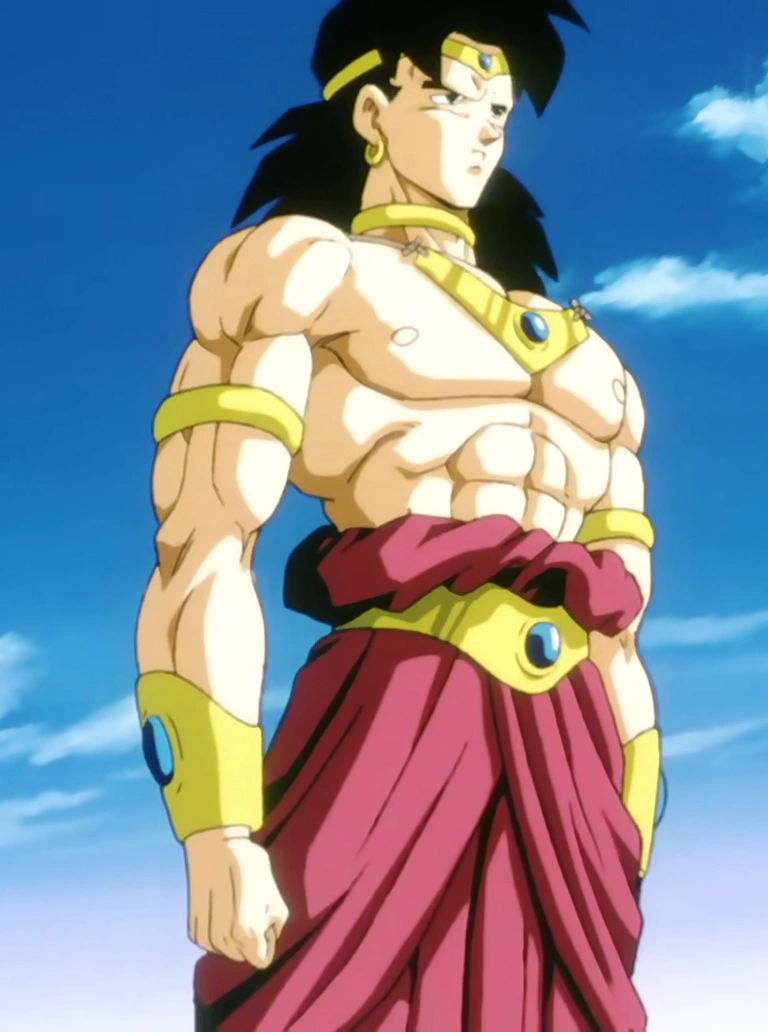
In all non-optional battles in Story Mode, the player can unlock a bonus called "Story Reenactment". It's obtainable by doing specific conditions in each battle like performing or finish the opponent with certain technique, defeating the opponent within or after a time limit, using or equipping an item, winning with determined health or win by a ring out victory. Most of these conditions are based in events that actually happened in the manga/anime, although the what-if battles also had them. Taking in account all possible battles for each character in their different playthroughs, there are a total of 111 hidden story reenactments (Goku having 21; Kid Gohan, 8; Teen Gohan, 7; Gohan, 10; Vegeta, 20; Piccolo, 18; Krillin, 7; Yamcha, 4; Tien, 6; Uub, 4; and Broly, 6). However, only 20 story reenactments of the 111 unlock exclusive voice clips, while the rest of them only award the player with more Z-points.
Once the game is completed, if all seven Dragon Balls are collected, the player is able to make a "wish" which lets him/her choose one from three special capsules, which include Breakthrough Capsules (these allow a player to use all of a character's moves and abilities at once), "Memories of... Capsules", and Equipment Capsules.
World Tournament
The World Tournament allows players to compete against the computer or up to 8 players in a Martial Arts Tournament. If more than one human player is present no prize money is available, but with only one human player the following prizes can be won:
If a player reaches second place, they will win half the prize money. If a player enters the tournament with a Sparking Capsule and wins, the prize money will be multiplied. The more exclamation marks on Sparking, the more money is earned (for example, Sparking! gives the player a 10% increase while Sparking!!!!!!! gives the player a 400% increase).
Novice: 10,000 Zeni
Adept: 30,000 Zeni
Advance: 50,000 Zeni
Cell Games: 50,000 Zeni
Dueling
Dueling mode allows a player to fight the computer at a preset skill level, or two human players to fight each other using any custom skills. A player may also watch a fight between two computer fighters.

It is possible to get a double KO during a duel due to attacks or ultimate attacks.
Edit Skills
Made up of four sections: the Skill Shop, character editing, instructions, and help. A player may edit skills on either memory card.
Aside from Dragon Universe, the Skill Shop is the place to get your skill capsules. Sometimes Launch sneezes, so she can appear either in her good or bad side. The prices range from 1,500 Zeni to over 120,000 Zeni.
Returning characters
- style="background-color: rgb(255,85,0);" - Android #16 No - Android #17 No - Android #18 No - Android #20 No - Captain Ginyu weighted clothes, "Milk" kanji & Power Pole No - Cell No - Dabura No - Frieza 100% final form No - Gohan Elder Kai Unlock Ability No - Goku Super Gogeta (w/ Vegeta) Yes - Goten Kid Trunks) No - Gotenks No - Great Saiyaman No - Hercule No - Kid Buu No - Kid Gohan RIT battle armor Yes - Kid Trunks No - Krillin Turtle School gi w/ weighted clothes, bald RIT battle armor, bald Yes - Majin Buu No - Nappa full battle armor w/ black jumpsuit Yes - Piccolo Yes - Raditz basic battle armor Yes - Recoome No - Super Buu No - Supreme Kai No - Teen Gohan Bulma's Battle armor No - Tien Yes - Trunks Capsule Corp jacket No - Vegeta No - Vegito No - Videl School outfit w/ pigtails No - Yamcha Yes
Traditional appearance
Grey palette swap
Black shirt w/ red scarf
Brown hunting jacket
Blue jacket w/ blue skirt
Black vest w/ pearls
Denim jacket w/ jeans
Traditional appearance
Blue palette swap
Traditional appearance
Imperfect Cell
# 17 absorption
Perfect form
Super Perfect form
Traditional appearance
Blue palette swap
Base
Demonic Will
Traditional appearance
Green jacket palette swap
First Form
Final Form
via item*)
Second form
Third form
Traditional appearance
Kuriza color palette
Purple gi
Orange gi w/ weighted clothes
Base
Super Saiyan
Super Saiyan 2
Fusion: Super Saiyan 4 Gogeta (w/ Vegeta)
Orange gi w/ weighted clothing
Blue gi
Damaged orange gi w/ weighted clothing
Base
Super Saiyan
Traditional appearance
Light blue chang pao
Base
Super Saiyan
Super Saiyan 3
Fat Gotenks
Traditional appearance
Yellow & green palette swap
Saiyaman outfit w/ helmet
Saiyaman outfit w/ bandana & glasses
Base
High Tension
Traditional appearance
Green palette swap
Traditional appearance
Dark pink palette swap
Base
Purple gi with long hair and white bandana
Purple gi with short hair
Base
Super Saiyan
Fusion: Gotenks (w/ Goten)
Traditional appearance
Black shorts & tank top
Base
Unlock Potential
Red shirt, w/ hair
Traditional appearance
Dark pink palette swap
Traditional appearance
Traditional appearance
Traditional appearance
Black Ginyu Force jumpsuit
Base
Gotenks absorbed
Gohan absorbed
Piccolo absorbed
Traditional appearance
Dark pink palette swap
Base
Fusion: Kibito Kai
Traditional appearance
Green palette swap
Base
Super Saiyan
Super Saiyan 2
Purple gi
Blue tunic, white pants
Green pants and sash
Base
Super Saiyan
Super Saiyan 2
Black tank-top w/ sword
Base
Super Saiyan
Super Saiyan 2
via item*)
Fusion: Vegito (w/ Goku)
Super Saiyan 4
Fusion: Super Gogeta (w/ Goku)
Fusion: Super Saiyan 4 Gogeta (w/ Goku)
Blue sleeveless jumpsuit
Bulma's Battle armor w/ jumpsuit
Full battle armor w/ Scouter & jumpsuit
RIT battle armor w/ jumpsuit
Base
Super Vegito
Traditional appearance
Black pallet swap
White tank top w/ short hair
Orange Turtle School gi w/ short hair
Yellow jacket w/ short hair
Orange Turtle School gi w/ long hair
New characters
- style="background-color: rgb(255,85,0);" - Bardock No - Broly No - Cell Jr. No - Cooler Final form No - Gogeta No - Kid Goku No - Omega Shenron No - Saibaman No - Uub No
Traditional appearance
Light purple palette swap
Super Saiyan
Traditional appearance
Purple palette swap
Traditional appearance
Red palette swap
Base form
Traditional appearance
Blue palette swap
Super Saiyan
Super Saiyan 4
Veku
Traditional appearance
Dark gray palette swap
Silver hair, red and dark blue vest palette swap (SS4)
Purple gi
Turtle school gi
Traditional appearance
Dark gray palette swap
Traditional appearance
Red palette swap
White pants, brown sash
Blue palette swap
Exclusive costumes
The following are exclusive alternate costumes only available in certain versions of the game.
- style="background-color: rgb(255,85,0);" - Goku Orange gi w/ weighted clothes and Halo - Piccolo Demon King Piccolo (skin) - Trunks Bulma's battle armor w/ sword & long hair - Videl Bulma skin
European Collector's Edition
Japanese version
American "Greatest Hits" Edition
HD Collection Version
European Collector's Edition
Japanese version
American "Greatest Hits" Edition
HD Collection version
European Collector's Edition
Japanese version
American "Greatest Hits" Edition
HD Collection Version
Japanese version after 100% completion and via Action Replay device

Japanese version extras
Just like Dragon Ball Z 2 (the Japanese version of Budokai 2) had a battle damaged outfit for Goku and a full outfit for Piccolo, including cape and turban, as well as featuring Kuriza as an alternate outfit for Frieza, Dragon Ball Z 3 has some new outfits as well: Trunks's 3rd outfit is long hair with Bulma's battle armor and his sword, Piccolo's 4th outfit is his father King Piccolo, and Goku's 4th outfit has a Halo above his head. While the American version of the game only had two movie clips to unlock (the instrumental and vocal openings from Budokai 2), three additional "Baba's Crystal Ball" capsules were added in the Japanese release, two are Japanese commercials for Budokai 2 and Budokai 3 and the third is an extended version of the various scenes shown in the credits, along with the full intro theme song. The only other real "extras" in the Japanese version of the game would be the vocal opening theme (which the original European release of the game had, anyway), and the fact that character mouths actually move on menu screens (which was not in either the original European and American releases of the game).
European version (Collector's edition)
The European "Collector's Edition" version of Budokai 3 was released in Fall 2005. Months before, the hype began to build that it would include not only the option to select the Japanese vocal track for the characters in the game, but that the Japanese version's extras would also be available for unlocking. The Platinum Version is identical to the Collector's Edition. The "Baba Crystal Ball Movies" are also available on this version after extensive game play. Several forums have posted the process needed to gain these capsules, which can be bought in the capsule store. However, the content of the movies are simply the original Japanese introduction to Dragon Ball Z: Budokai 2. One clip is the intro with vocal accompaniment while the second clip is the instrumental version of the intro.
American version (Greatest Hits)
The American "Greatest Hits" version of Budokai 3 was released on November 9, 2005. Just like the European Collector's Edition, the game includes the three extra outfits for Goku, Trunks, and Piccolo (which can be unlocked by entering case-sensitive passwords in Dragon Arena), and the option to switch the language to Japanese, making this particular version of Budokai 3 the first North American-released DBZ game to include such feature.
At first, the game didn't actually contain the promised extra features, however. The instruction booklet and the back of the case claimed the game had the original Japanese voice cast but was deprived of such features. It also tended to corrupt saved data from the original version of Budokai 3. Essentially, it was the original game disc repackaged again.
Atari has released a correct version of the game but has made no effort to distinguish it from the incorrect version (aside from the shrinkwrap method mentioned below). Atari is now offering to replace incorrect versions of the game with the correct one.
It has been reported by some that the most recent shipment with the correct disc may be distinguished by the type of shrinkwrap it is packaged in. Atari apparently re-opened the packages to replace the defective discs and re-wrapped them. These copies are wrapped in the same manner as a retailer would shrinkwrap, sealed around the edges and slightly loose as opposed to tight-fitting and folded at the corners.
The "correct" version is basically a direct port of the European Collector's Edition, only differing in aspects such as the non-vocal opening, "Hercule City" spelling in Dragon Universe, and a new memory card data image.
Limited Edition
The Limited Edition Box Set includes the standard game, an exclusive glow-in-the-dark chibi figure of Broly wearing his in-game alternate costume, and a DVD containing a documentary titled "Behind the Screams", which features the U.S. voice actors going over the game's development, as well as the "Budokai 3 Super Trailer". The DVD also contains a URL linked to a webpage containing a sneak peek of upcoming Dragon Ball Z games.
Unused Content
Bulma was rumored to have been planned as a playable character. This is supported by the fact that a full model for her exists in the game (it can be seen in the 11th stage in Training Mode), and there are World Tournament callouts for her in both English and Japanese (additionally, the Limited Edition DVD shows her voice actress recording fight lines for her). It's possible to choose Bulma as an alternate costume for Videl using Action Replay codes in the Japanese version, though she is glitchy and cannot have skills equipped.
An unused model of Frieza in his hoverchair also exists. Presumably, it would have been used during exploration in his Dragon Universe.
World Tournament callouts also exist for Zarbon, Dodoria and Android 19 (who were only in the first Budokai game), suggesting they were planned to return in this game. A call-out for "Shin" also exists, though it presumably would have been used for Supreme Kai. Unused dialogue in the dragon universe story has character interactions for Baby Vegeta, Janemba and Super 17 suggest that they were planning to be on the main roster.
Also in game data: Burter, Jeice, Guldo were set to appear in game to complete the whole Ginyu Force, but only Recoome and Ginyu made the final cut (The Budokai models of those 3, actually apeared in Dragon Ball Heroes). In addition Gokule, Tiencha and Super Buu (Vegeta, Freeza, Yamcha & Tien, Cell absorptions) from Budokai 2 were also planned to return as well.
Additionally, unused dialogue suggests that every character was planned to have a Dragon Universe story mode, but time constraints prevented that from happening. In the final game, only Goku, Kid Gohan, Teen Gohan, Gohan, Vegeta, Krillin, Piccolo, Tien, Yamcha, Uub and Broly have Dragon Universe stories. The unused dialogue also suggests the possibility of a lot of "what-if" stories.
Sources
Adapted from the original article, under CC BY-SA 3.0.