Work
Dragon Ball Z: Budokai Tenkaichi
Fighting video game released for the PlayStation 2
Dragon Ball Z: Budokai Tenkaichi, originally published in Japan as Dragon Ball Z: Sparking!, is a fighting video game released for the PlayStation 2. The game was developed by Spike and published by Atari and Bandai in the U.S. and Japan, respectively.
The game features 58 playable characters with a total of 90 playable forms from the various TV series and movies. In addition, this game has fully destructible environments. In October/November 2006, Dragon Ball Z: Budokai Tenkaichi 2 was released as the game's first sequel.
Name
The "Sparking!" in the Japanese title references both the first and last word in the first opening theme to the Dragon Ball Z TV series, "Cha-La Head-Cha-La" (performed by Hironobu Kageyama). However, the opening theme to the game is the TV series' second opening theme, "We Gotta Power" (featured in the Japanese version; the American and European versions includes a different, non-vocal song), which is also sung by Hironobu Kageyama.
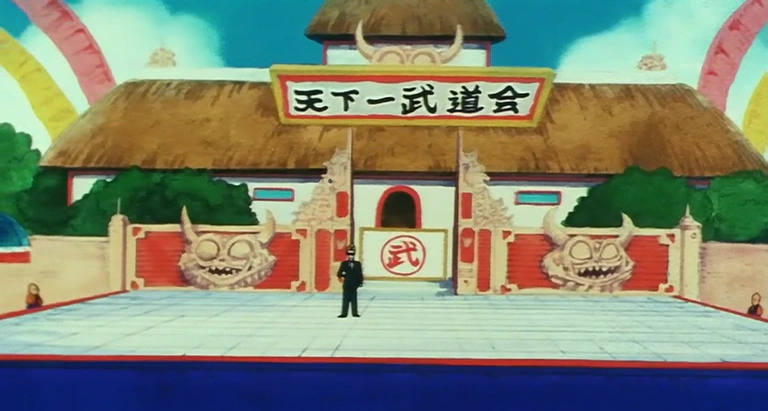
The "Budokai Tenkaichi" title of the North American version is a rearranged version of Tenkaichi Budōkai (天下一武道会 lit. "Number One Under the Heavens Martial Arts Tournament"). In the series, the Tenka-ichi Budôkai is a gathering of fighters in a competition for glory, fame, and prize money.
The game is not considered a part of the Budokai series, despite its misleading title. In addition to a completely different game engine, the game was developed by an entirely different company (Spike as opposed to Dimps). The game is also titled differently from the rest of the Budokai series in Japan. Were it a true Budokai game, it would have been Dragon Ball Z 4 in Japan. Speculation on the English re-title is that Atari chose to market the game as part of the Budokai series in order to capitalize on a pre-existing market of fans already familiar with said game series. The English version also uses a great deal of sound effects and background music made for the Budokai series.
Soundtrack differences
Further confusing fans in North America, Atari's domestic release of the game does not feature the same music found in the original Japanese version. While Sparking! features actual music from Dragon Ball Z (and two other pieces from the Dragon Ball and Dragon Ball GT where appropriate) as composed by Shunsuke Kikuchi, the American release of the game features recycled music from the Budokai series (composed in Japan by Kenji Yamamoto).
Gameplay
The game is quite different from the often-compared Budokai series; it uses a "behind-the-back" camera perspective. Many say that the game feels like a combination of the Budokai series and the game engine from Dragon Ball Z: The Legend for Sega Saturn and PlayStation. Although the engine is more like a typical third-person shooter, it is difficult to master.
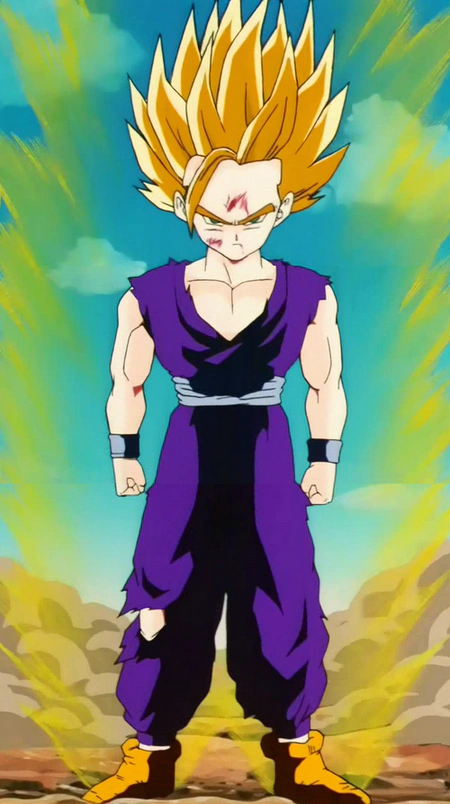
Unlike the Budokai series, there are no in-game transformations, but characters can also be selected from the get go in their initial transformation (for example, starting a battle in Super Saiyan, instead of base form).
In the game, a base character can have multiple "forms" to choose from on the character select screen (for example, Perfect Cell is a different "form" from 1st-form Cell, but they are both selected from the base Cell character).
Characters can charge their ki to perform super attacks. Ki charges slower underwater.
There are various classes of characters with special abilities that alter the battle:
Artificial Humans (Jinzôningen) - Will not show on radar unless locked on to. Cannot charge Ki (unless ki gauge is full, then may charge as normal to enter Max Power mode). Energy absorption models gain ki by absorbing incoming energy dan attacks. Unlimited energy models constantly replenish ki at a consistent rate. The gauge can also be filled as normal by landing successful melee attacks, just like any other character. The characters that have this effect are Android 16, 17, 18, 19, 20 and Super 17.
Large Characters (ex: Broly) - Do not flinch from smaller characters' melee attacks. The characters that have this "Brick wall" effect are Broly, Bojack, Super Trunks, Great Ape, Great Ape Vegeta and Android 16.
Great Ape - Do not flinch from smaller characters' melee attacks, and cannot be thrown or hit with a Dragon Dash-type finishing move.
Scouter (ex: Bardock) - Can lock onto an opponent from anywhere using the scouter, however it takes a few moments for them to turn the scouter on and then begin looking around, but the scouter is broken when the character takes a certain amount of damage. The characters that have scouters include: Raditz, Nappa, Scouter Vegeta, Dodoria, Zarbon, Recoome, Burter, Jeice, Captain Ginyu and Bardock.
Mr. Satan - None of the other characters "flinch" when hit by his melee attacks (not even when fighting another Mr. Satan).
Majin Buu - All of Buu's forms recover health slowly over time.
Z Battle Gate
The story mode of the game, Z Battle Gate, progresses similar to the story modes in previous games. Players can select battles from different sagas and proceed through the story of Dragon Ball Z. The battles are bookended, with players given an objective to accomplish such as finishing the battle with a certain special move or within a certain amount of time. The story mode branches out, allowing for a few battles that were not originally in the story. Dragon Balls can be found inside the destructible environment. After clearing some gates, an extra fight may or may not be unlocked. It also shows two new stories when the movie and Dragon Ball GT villains fight the Z Fighters and a tournament which involves Dragon Ball and Dragon Ball Z characters.
Ultimate Battle
This new mode pits whichever fighter the player chooses against 100 characters. There are winning points and ranks in this mode. Depending on how the battle went, players get positive or negative winning points. However, if the player ends up with no winning points, the game is over, and the player must start back at Rank 100 (the game starts off at Rank 100). Occasionally, a different fighter (always secret characters) will "break in" (interrupt the fight before it begins). Players get more winning points for defeating them but lose more than usual if they do not defeat them. Also, if the player wins five straight normal fights, someone five ranks ahead will offer a challenge. Completion of this challenge moves the player five ranks up.
World Tournament
Similar to the same mode in the Budokai series, the player can enter a world tournament and try to win their way to the top. There are three levels of the basic tournament and a Cell Games mode (which is hosted by Cell). Since characters can fly, characters can leave the perimeter of the arena, but will be called for ring-out if they touch the ground. There are no restrictions to the Cell Games mode, but the last match of the Cell Games mode is always against Perfect Cell. Since there is no money awarded in this game, the prize for winning a World Tournament is a Z-item. The World Tournament mode can be played with several entrants, but if there is more than one human player, then no prize will be awarded.
Evolution Z
7 slots for Z-items, but the stronger characters can have as little as 3 slots. There are Z-items that will increase a players Z-item slots, but the number of slots cannot exceed 7. Some Z-Items can be fused together to make new abilities and even characters.
Character Illustrations
A unique feature not featured in any of the other Budokai games is Character Illustrations. They list English and Japanese voice actors as well as detailed profiles for all currently unlocked characters. The Character Illustrations reveals the Great Ape featured in Budokai Tenkaichi without armor to be a generic Saiyan warrior, and not any characters in the series (Goku or Gohan).
Playable characters
- style="background-color: rgb(255,85,0);" - Android #16 Unlockable - Android #17 Unlockable - Android #18 Unlockable - Android #19 Unlockable - Android #20 Unlockable - Baby Vegeta Super Baby 2 Unlockable - Bardock Unlockable - Bojack Post-Transformation Unlockable - Broly Unlockable - Burter Unlockable - Captain Ginyu Unlockable - Cell Starter - Cell Jr. Unlockable - Chiaotzu Starter - Cooler Final Form Unlockable - Demon King Dabura Unlockable - Dodoria Unlockable - Frieza Final Form "Full Power" Starter - General Tao Unlockable - Gogeta Unlockable - Gohan Ultimate Gohan Starter - Goku Starter - Goten Unlockable - Gotenks Unlockable - Great Ape Starter - Great Saiyaman Unlockable - Guldo Unlockable - Hercule Unlockable - Janemba Unlockable - Jeice Unlockable - Kid Buu Unlockable - Kid Gohan Starter - Kid Goku Unlockable - Kid Trunks Unlockable - Krillin Starter - Majin Buu (Good) Unlockable - Majin Buu (Pure Evil) Unlockable - Master Roshi Unlockable - Nappa Unlockable - Piccolo Starter - Raditz Unlockable - Recoome Unlockable - Saibaman Unlockable - Super 17 Unlockable - Super Buu Unlockable - Super Gogeta Unlockable - Teen Gohan Starter - Tien Starter - Trunks (w/ Sword) Starter - Trunks (Fighting) Super Trunks Unlockable - Vegeta Super Vegeta Starter - Vegeta (Scouter) Unlockable - Vegito Super Vegito Unlockable - Videl Unlockable - Yamcha Starter - Zarbon Post-Transformation Starter
1st Form
2nd Form
Perfect Form
Perfect Cell
1st Form
2nd Form
3rd Form
Final Form
Mecha Frieza
Base
Post-Transformation
Base
Base
Gotenks absorbed
Ultimate Gohan absorbed
Base
Base
Base
Majin Vegeta
Base
Great Ape (Vegeta)
Base
Base

Errors
In the character selection screen, Broly's name is misspelled as "Brolli".
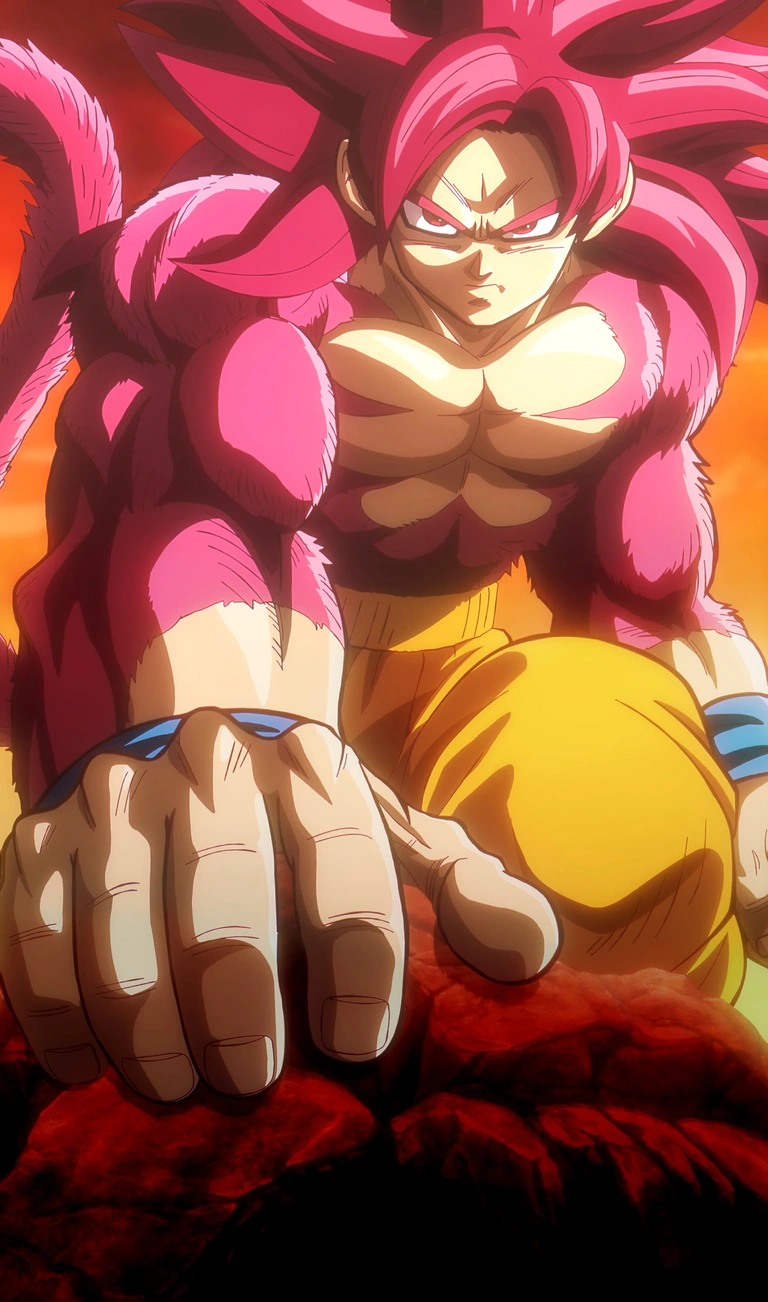
When Super Saiyan 4 Goku defeats Super Saiyan 4 Vegeta, he will speak in Japanese.
When Super Saiyan Trunks (armor) uses a Finish Buster (English voices), he will say it with his Japanese voice.
Also in the PAL versions, Kid Buu's voice is completely in Japanese, even with the English voices selected.
In the post-victory scene for the battle between Chiaotzu and Nappa, Nappa says "Kch... You almost gave me a scare", but the on-screen subtitles display "Kch... That was a lousy thing to do..."
In the post-victory scene for the first battle between Teen Gohan and Cell, "spoiled" was misspelled as "spolied".
Sources
Adapted from the original article, under CC BY-SA 3.0.